|
|
|
|
|
UNDERSTANDING THE WINGCHUN SYSTEM
Wing Chun consists of three empty-handed forms, the wooden dummy
form, and two weapons forms - the butterfly swords and the long
pole. Each form presents specific energetic and theoretical ideas
that translate immediately into effective fighting, building stance,
maintaining structure, effective footwork, counter-attack and
recovery, developing power, and much more. |
|
|
|
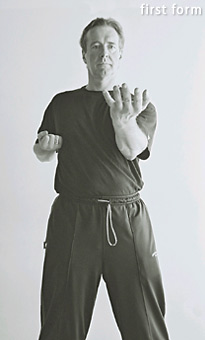
Sil Lim Dao or "little idea" is the most important set in the Wing Chun system. Not only are the fundamental techniques introduced, including center line theory, it also contains the keys to developing gung lik or, elbow energy, the key to striking and defending with power.
Chum Kiu or "seeking the bridge" introduces footwork and kicking. The student learns to add to the elbow energy developed in the first form by turning and stepping. "Seeking the bridge" refers to the idea of closing the gap, making contact with the opponent's arms, controlling their ability to attack while striking when and where an opponent is vulnerable.
Biu Gee or "thrusting fingers" is an advanced form that teaches recovering the center line in a combat situation, developing energy in two opposite directions and getting energy to the wrist. Devastating techniques such as open finger strikes and striking with the elbow are developed and explored.
The wooden dummy or "mook jong" form takes the movements and techniques introduced in the three empty handed forms and applies them in a fighting context. Seven of the eight Wing Chun kicks are introduced, and the essential energy of the waist, known as "yu ma", is developed, adding tremendous power to a student's skill.
|
|
|